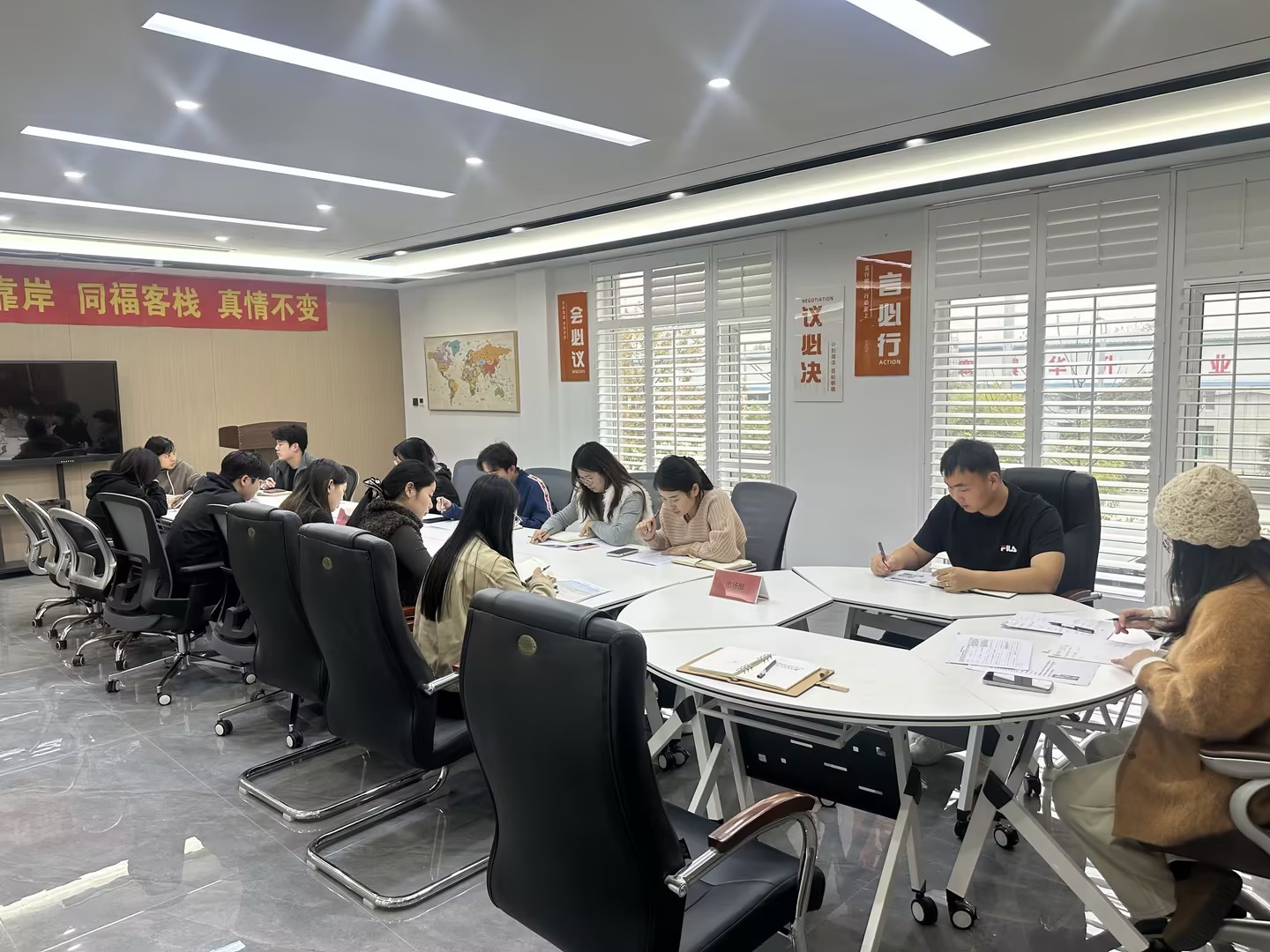
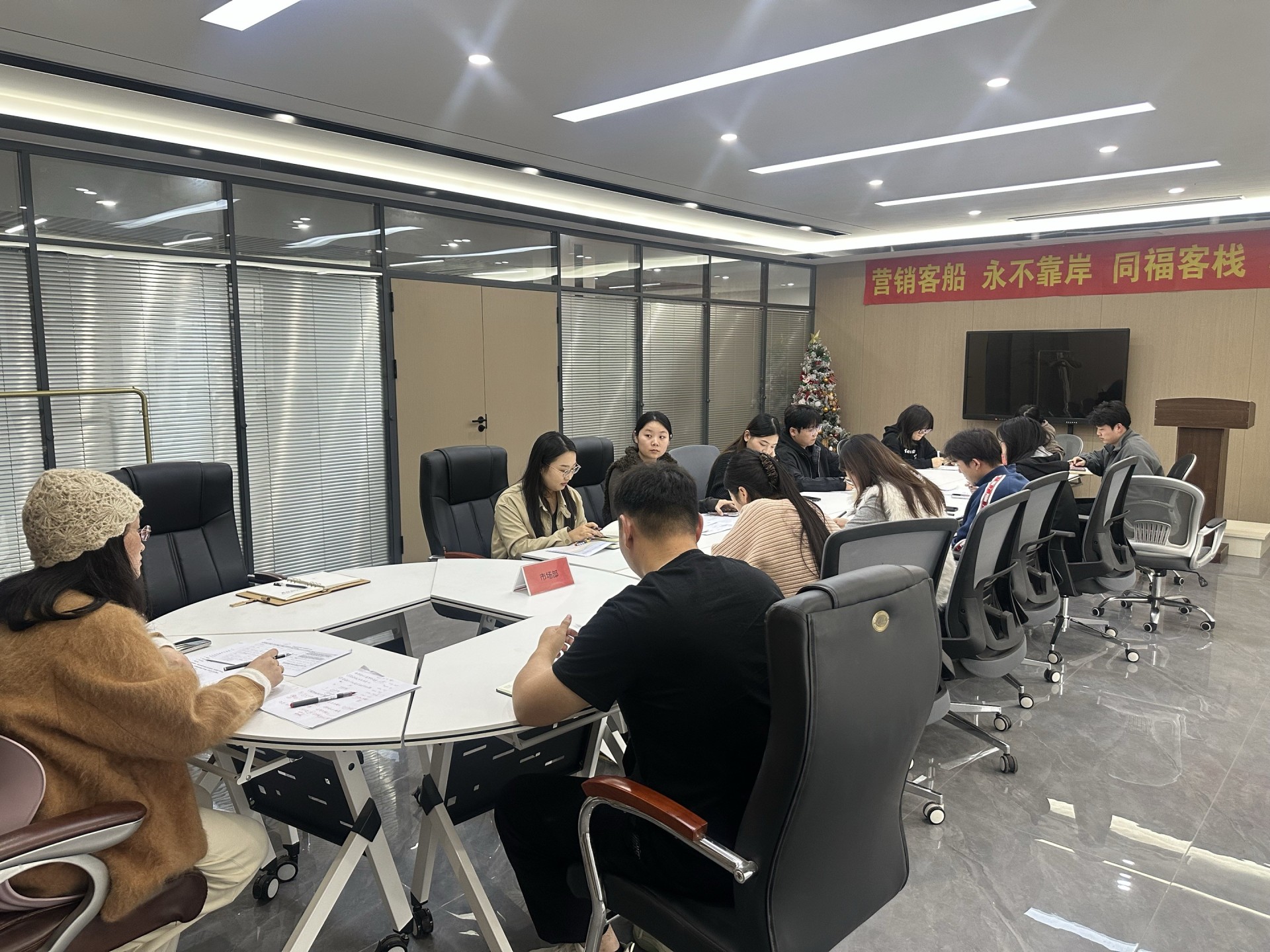
One meeting at Huasheng Industry is not about a customer, an order or a shipment. It happens every month, it lasts a few hours, and its entire subject is the company's own work over the past four weeks.
The rule is simple: no reports for the sake of reporting, no praise for the sake of morale. The team — product development, production and quality, customer service, operations, shipping and sales — sits down together and asks what could have been done better, then decides what to change. Every point raised is followed to a decision, and every decision carries a name and a date. Next month, the first thing the meeting looks at is whether last month's decisions were actually kept.
October's session ran long. It had been a busy month, with several days spent at the Canton Fair in Guangzhou in the middle of it, and a full order book running alongside. Everything was on the table: what buyers asked at the fair and what that tells us about our range, where a question took one exchange too many, where a specification reached production later than it should have, where a delivery date could have been communicated sooner.
None of these were crises. Most were details that, left alone, would never cause a catastrophe — they would simply make us slightly less good than we intend to be, one small slippage at a time. That is precisely what a monthly review exists to catch.
Customers rarely see this meeting, and they do not need to. What they see is its result: a supplier whose lead times hold, whose specifications are confirmed instead of assumed, whose answer to a problem is a correction rather than an explanation, and whose people already know what happened last month when this month's order arrives.
In manufacturing, reliability is not a declaration. It is a habit practised on a schedule. Ours runs once a month, in a room with a world map on the wall, and it has been running long enough that it now shapes how we quote, how we build and how we ship.