
Compliance work rarely makes the news. It is measured in documents that nobody outside the trade ever reads, and it becomes visible only when it fails — a container held at a border, a season lost.
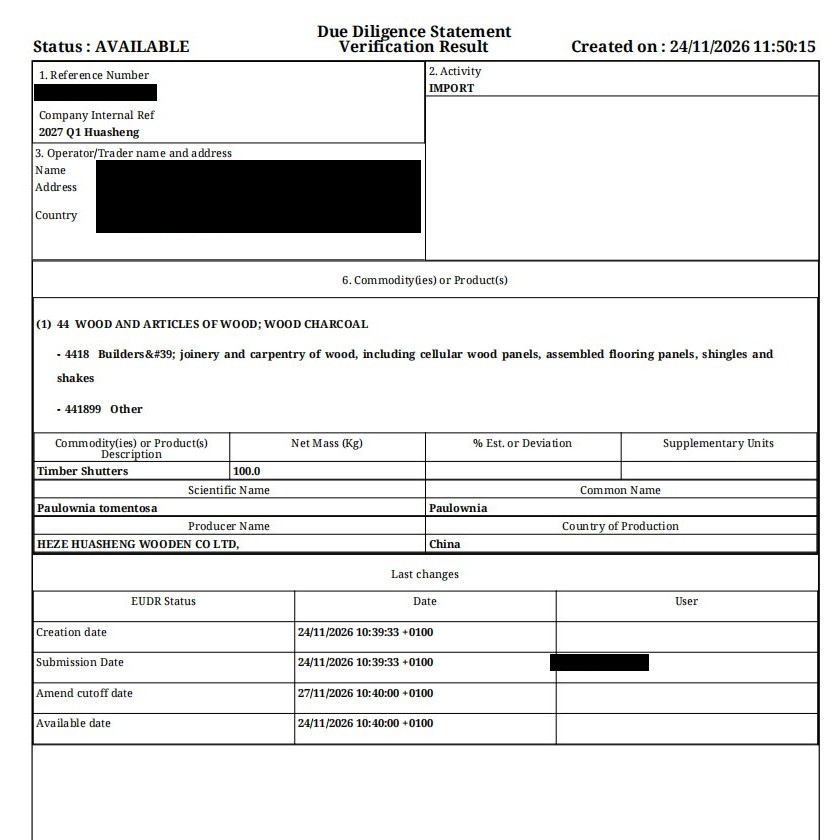
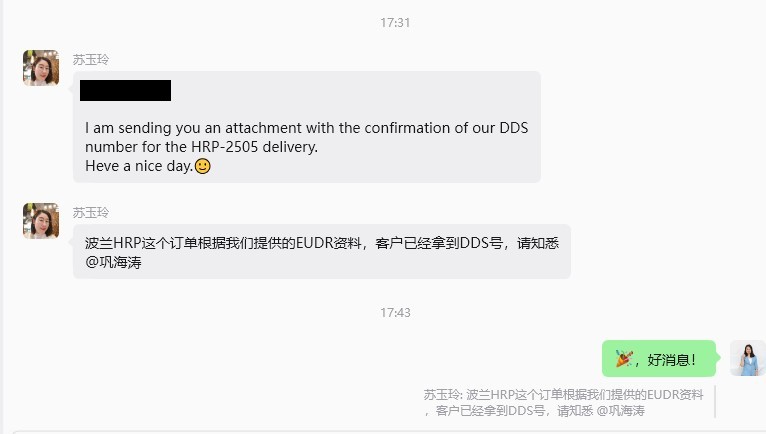
This month it became visible in a different way. Three of the company's customers obtained their own DDS numbers for shipments of shutters and blinds into the UK and EU in the first quarter of 2027, having built their EUDR due diligence statements on documentation supplied by Heze Huasheng Wooden Co., Ltd.
Under EUDR, the due diligence statement belongs to the importer. The operator placing the goods on the market files it, in their own name, and answers for its accuracy. A manufacturer cannot file on their behalf, and no supplier certificate removes that duty.
What a manufacturer can do is make the statement possible. That requires records kept at the point of production: the species in the batch, the producer's identity, the plot the timber came from, the harvest behind it. For a Paulownia wood shutter, the scientific name is written into the statement — Paulownia tomentosa — alongside the production country and the net mass of the consignment.
The regulation pushes obligation upstream in practice, even where it does not in law. An importer in Northern Ireland or a retail group in Poland cannot verify a plot they have never seen, in a county they have never visited. They depend on the producer's records being real, current and legible.
Building that capability is not a marketing exercise. It means aligning the timber intake with land-use documentation, keeping species records consistent through grading and coating, and answering requests for a specific shipment without reconstructing the history from memory.
What it changes commercially
Three effects are already clear.
Documentation now sits on the critical path with production. A Q1 shipment needs its data in Q4.
Customers choose suppliers on the ability to answer, not on price alone. The buyers who obtained DDS numbers first asked first — and were able to plan because of it.
The company's own record-keeping has tightened. A supplier that can answer an importer's due diligence request precisely is also a supplier that can trace a batch internally when something goes wrong.
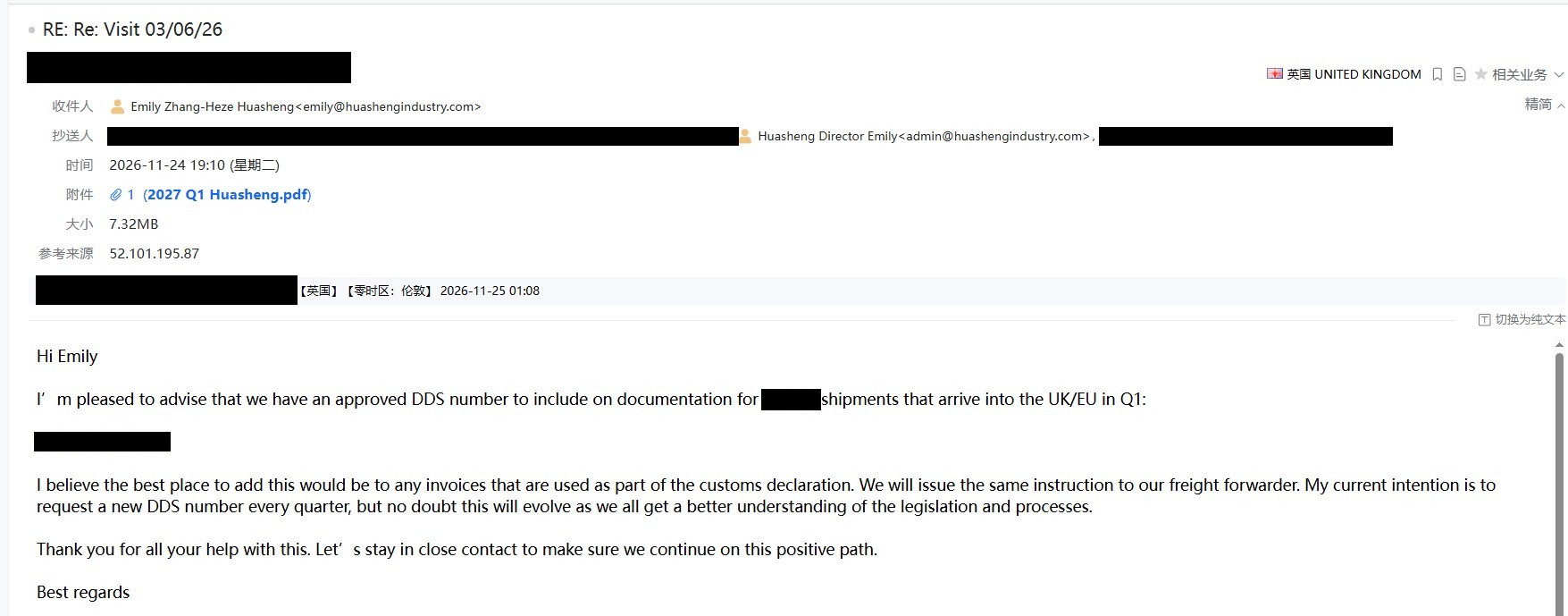
One customer has indicated it intends to request a fresh statement each quarter, reflecting how the regulation is being applied in practice rather than how it was first read. The company's documentation process is being built for that rhythm: a standing pack per customer, per quarter, per destination.
Compliance, in this trade, has stopped being a department. It is a property of the supply chain, and it is either present at the point of production or not present at all.